At some point, almost every D2C apparel brand faces this decision. It usually comes up when the catalog starts growing. The team gathers to review product visuals. Someone points out that the images look inconsistent. Another person suggests a model shoot to make the brand feel more premium. Someone else recommends sticking with flat lays because they’re simple and affordable. And then there’s the quieter option — ghost mannequin — which often enters the conversation as the “practical” choice. At first, the discussion feels creative.
What looks better?
What fits the brand aesthetic?
What will look good on Instagram?
But once the store begins scaling, the conversation shifts. Because product image format doesn’t just affect how a brand looks. It affects how it sells. In 2026, customers move quickly. They scroll fast, compare faster, and make decisions in seconds. If a product image doesn’t communicate clearly, the customer doesn’t spend time analyzing it. They just move on.
That’s why the comparison between ghost mannequin vs flat lay isn’t really about design anymore. It’s about clarity. Consistency. And conversion performance.
How Customer Behavior Has Changed
A few years ago, shoppers were more patient. They would read descriptions. Zoom into images. Spend time evaluating products. That behavior has changed. Today’s ecommerce experience is closer to scrolling through a social feed. Customers scan visually, and their first impression is almost always based on product imagery.
Within a few seconds, they’re trying to answer a few basic questions:
- What does this actually look like?
- How structured is it?
- Will it fit the way I expect?
- Does this brand feel trustworthy?
If the image format doesn’t answer those questions quickly, uncertainty appears. And uncertainty is one of the biggest conversion killers. This is where the choice between ghost mannequin vs flat lay starts to matter — not as a creative decision, but as a performance decision.
Understanding the Three Main Product Image Formats
Before comparing results, it helps to step back and understand what each format actually communicates to the customer. Because each one sends a different visual signal.
Flat Lay Photography
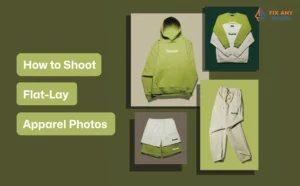
Flat lay is one of the simplest product photography methods. The garment is placed on a flat surface and photographed from above. It’s clean, minimal, and easy to produce.
For early-stage brands, flat lay makes sense:
- Low cost
- Fast setup
- No models required
- Easy to repeat
It also works well for social content and lifestyle presentation. But when brands compare ghost mannequin vs flat lay, a limitation becomes obvious. Flat lay removes depth.
A structured jacket may look thin.
A fitted dress may look loose.
A hoodie may lose its shape completely.
Customers aren’t just looking at the product. They’re trying to imagine how it will look when worn. Flat lay doesn’t always help them do that.
On-Model Photography
Model photography solves a different problem. Instead of showing the product alone, it shows the product in context. Movement, posture, styling — all of it helps create an emotional connection. For branding and campaigns, this works extremely well.
Customers can see:
- How the product fits on the body
- How it’s styled
- What kind of lifestyle does the brand represents
But when it comes to product pages and large catalogs, model photography introduces new challenges. Different models. Different body types. Different poses. Different lighting sessions.
Over time, maintaining consistency becomes difficult. And in e-commerce, consistency often matters more than creativity. That’s why many teams start reconsidering their approach as the catalog grows.
Ghost Mannequin Photography
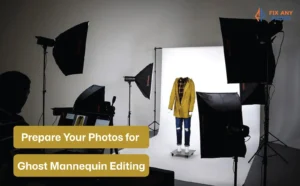
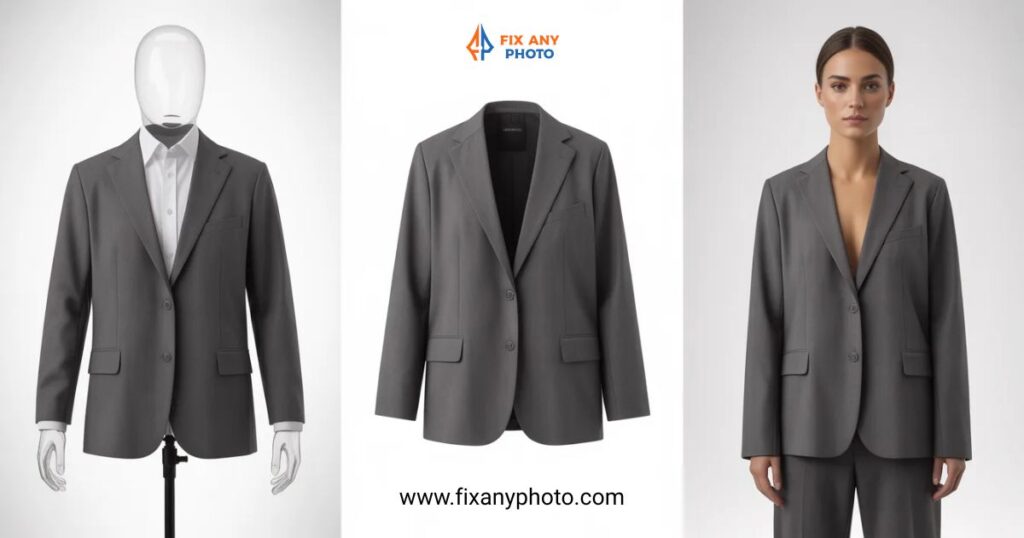
Ghost mannequin sits somewhere between flat lay and model photography. The garment is photographed on a mannequin to capture its natural shape. Then the mannequin is removed during editing, leaving a clean, structured image. When brands evaluate ghost mannequin vs flat lay, the key difference is dimensionality.
Ghost mannequin shows:
- Natural garment structure
- Fit and form
- Sleeve and collar shape
- How the product holds itself
It removes distractions while still giving customers a realistic sense of the product. It’s not emotional like model photography. It’s not minimal like a flat lay. But it answers the most important question quickly: “What will this actually look like?”
Why This Comparison Matters for D2C Brands

For creative teams, visual style is important. But for growth teams, the question is different. Which format helps customers make decisions faster?
When brands compare ghost mannequin vs flat lay, the real difference appears at scale. Flat lay may look clean during a design review. Model shots may look impressive in a campaign. But on a product page, clarity usually wins over creativity. Because e-commerce isn’t a gallery. It’s a decision environment. And the easier that decision feels, the higher the conversion rate tends to be.
The Real Problem Most Brands Notice
Interestingly, most brands don’t start this comparison proactively. It usually begins after performance issues appear.
The signs are subtle:
- Good traffic, but low add-to-cart rates
- High product page views, but short engagement time
- Customers browsing multiple items without purchasing
At first, teams look at pricing, ads, or product descriptions. Eventually, attention shifts to the visuals. And that’s when the conversation around ghost mannequin vs flat lay becomes serious. Because in many cases, the product isn’t the issue.
The clarity is.
What Actually Happens After You Change Image Format
When brands switch image formats, they usually expect a visual improvement. Cleaner pages. Better alignment. A more professional look. But what’s interesting is that the biggest impact often shows up in analytics.
Creative teams notice:
- Higher product engagement
- Longer time on page
- More add-to-cart actions
And sometimes, the difference is subtle at first. Not dramatic. Not overnight. But over a few weeks, patterns begin to change. This is where the comparison between ghost mannequin vs flat lay moves beyond aesthetics and into performance. Because product images don’t just decorate a page. They reduce — or increase — decision friction.
Why Clarity Drives Conversions
Think about how customers shop online. They’re not studying products carefully. They’re scanning. If an image creates even a small moment of confusion — about fit, structure, or shape — the customer pauses. And that pause often leads to comparison, hesitation, or exit.
Flat lay images, while clean, sometimes leave too much to the imagination.
Is the fabric structured or soft?
Will the shoulders hold shape?
Is the fit relaxed or tailored?
When brands compare ghost mannequin vs flat lay, the advantage of ghost mannequin becomes clear. It answers visual questions immediately. Customers don’t have to imagine the structure. They see it. And when understanding becomes instant, decision-making becomes easier.
The Trust Factor Most Teams Overlook
Trust in e-commerce isn’t built through one element. It’s built through consistency. If product images vary in lighting, alignment, or presentation style, the catalog begins to feel uneven. Not necessarily unprofessional — but not fully reliable either. Customers might not consciously notice the difference. But they feel it.
A standardized ghost mannequin approach creates:
- Consistent product positioning
- Uniform lighting and shadows
- Clean visual hierarchy
When brands evaluate ghost mannequin vs flat lay at scale, this consistency becomes one of the biggest advantages. Because trust isn’t created by creativity. It’s created by predictability.
The Hidden Impact on Return Rates
Returns are one of the biggest operational challenges for apparel brands. And many returns happen for a simple reason:
The product didn’t match the customer’s expectations. Flat lay images sometimes distort perception:
- Structured garments appear loose
- Thick fabrics look thin
- Tailored items look flat
Ghost mannequin presentation provides a more accurate visual reference. Customers can better understand:
- Shape
- Fit behavior
- Product structure
When comparing ghost mannequin vs flat lay, brands often see a reduction in size- and fit-related returns. Even a small decrease can have a meaningful impact on margins.
Customer Expectations in 2026

The e-commerce environment has changed. Customers today are used to marketplace-level presentation. They compare products quickly, often across multiple brands. If your product images look less structured or less clear than competitors’, the difference is noticeable. And customers don’t analyze why. They just move on.
That’s one reason major fashion marketplaces rely heavily on structured product imagery. The shift toward ghost mannequin presentation isn’t a trend. It’s a response to customer behavior.
When brands evaluate ghost mannequin vs flat lay in today’s environment, the question becomes:
Which format meets modern expectations?
Cost Comparison: The Short-Term vs Long-Term View
Flat lay often looks like the cheapest option. And in the early stages, it usually is. Minimal setup. Quick shooting. Basic editing.
But as catalogs grow, hidden costs appear:
- Reshooting for consistency
- Reformatting older images
- Manual alignment adjustments
- Visual inconsistency across seasons
Model photography, on the other hand, is expensive from the start. Scheduling. Styling. Talent. Location. Coordination. When brands step back and compare ghost mannequin vs flat lay from a long-term perspective, ghost mannequin often becomes the most scalable solution. The setup cost is moderate.
But once the workflow is established:
- Cost per product decreases
- Consistency improves
- Production becomes predictable
For growing D2C brands, predictability is often more valuable than initial savings.
The Scalability Problem Most Brands Eventually Face
At the beginning, managing product images is simple. A small catalog. A few shoots. Everything feels manageable. But growth changes the situation quickly. New collections. Seasonal launches. Product variations.
Suddenly, the team is dealing with:
- Multiple shooting styles
- Different lighting setups
- Mixed visual formats
The catalog starts to feel inconsistent. And inconsistency doesn’t just affect design. It affects how professional the brand feels.
When brands compare ghost mannequin vs flat lay at this stage, ghost mannequin usually wins because it supports a standardized workflow.
Same angles. Same structure. Same presentation. That consistency makes scaling much easier.
The Role of Creative Teams vs Growth Teams

There’s often a quiet tension in this decision. Creative teams think in terms of visual identity and aesthetics. Growth teams think in terms of performance metrics.
Flat lay may feel more artistic. Model shoots may feel more brand-driven. But ghost mannequin often becomes the preferred option when performance is the priority. It’s not the most creative format.
It’s the most efficient one. And for product pages — where the goal is clarity rather than storytelling — efficiency usually wins.
Where Execution Makes the Difference
One important detail that often gets overlooked: Ghost mannequin only works when the execution is high quality.
Poor editing can create:
- Distorted shapes
- Unnatural shadows
- Visible edges
- Artificial-looking garments
At that point, the format itself isn’t the problem — the execution is. That’s why many growing D2C brands rely on professional editing through the Fix Any Photo homepage to ensure:
- Natural garment reconstruction
- Clean edge finishing
- Consistent lighting balance
- Marketplace-ready quality
When catalogs scale into hundreds or thousands of SKUs, maintaining this level of consistency internally becomes difficult.
When Each Format Actually Makes Sense
By now, the comparison between ghost mannequin vs flat lay probably feels less like a design debate and more like a strategic decision. But that doesn’t mean one format should replace the others entirely. Each approach has a role. The key is understanding where each one performs best.
Flat Lay Works Best For:
- Social media content
- Editorial layouts
- Brand storytelling posts
- Minimalist product lines
- Accessories or soft garments
Flat lay is simple, clean, and visually appealing. It just isn’t always the best choice for explaining structure or fit.
On-Model Works Best For:
- Homepage banners
- Paid ad campaigns
- Lookbooks
- Lifestyle marketing
- Brand positioning
Models add emotion and context. They help customers imagine the product as part of a lifestyle. But for large catalogs, maintaining consistency with model photography becomes expensive and time-consuming.
Ghost Mannequin Works Best For:
- Product detail pages
- Category listings
- Marketplace uploads
- Large product catalogs
- Standardized e-commerce presentation
When brands compare ghost mannequin vs flat lay specifically for product pages, ghost mannequin usually delivers the clearest and most scalable solution.
The Hybrid Strategy Most Successful D2C Brands Use
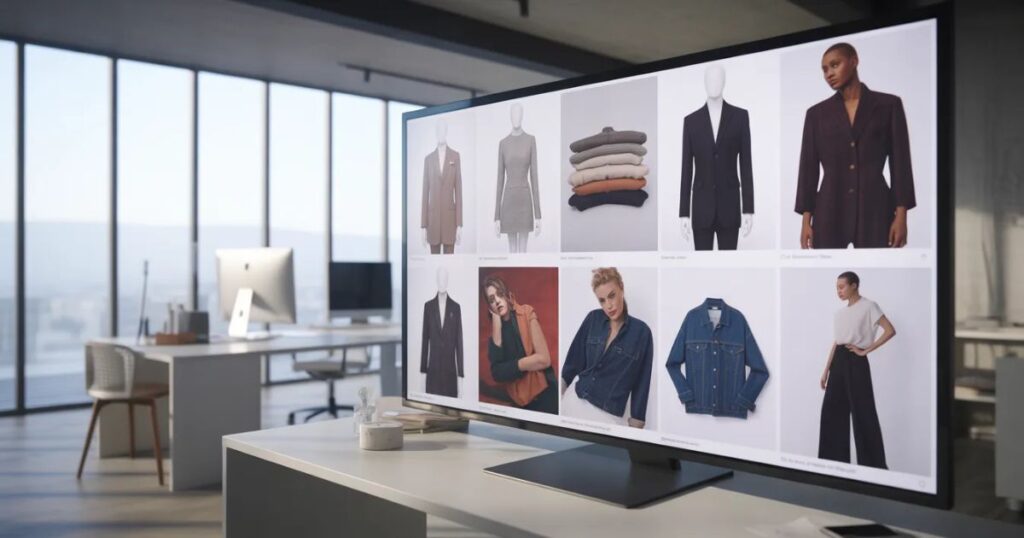
Interestingly, high-performing brands rarely rely on just one format. Instead, they separate photography based on purpose.
A common structure looks like this:
- Ghost mannequin for core product images
- On-model for campaigns and ads
- Flat lay for social and content marketing
This approach allows the brand to maintain both performance and personality. Ghost mannequin handles clarity and consistency. Other formats handle storytelling.
When teams think about ghost mannequin vs flat lay in this context, the decision becomes easier. It’s not about choosing one over the other — it’s about using each format where it works best.
Building a Scalable Workflow
Once the decision is made to standardize product presentation, workflow becomes the next challenge. Because consistency doesn’t happen automatically.
Most growing brands eventually implement a simple system:
1. Standardized Shooting Setup
- Same background
- Same lighting
- Same camera angle
- Same mannequin
2. Garment Preparation
- Steam or press each item
- Align sleeves and collars
- Ensure proper fitting on the mannequin
3. Batch Processing
Instead of editing images one by one, products are processed in bulk. This reduces time and maintains consistency across the catalog. When brands move from flat lay to structured presentation, workflow discipline becomes just as important as the photography itself.
Where Many Teams Run Into Problems
Switching formats is one thing. Maintaining quality over time is another.
Common issues include:
- Inconsistent shadow depth
- Shape distortion during editing
- Uneven product alignment
- Color variation between batches
When these inconsistencies appear, the catalog starts to feel uneven again, which defeats the purpose of standardization. This is usually the point where internal editing becomes difficult to manage.
Why Professional Editing Becomes Necessary at Scale
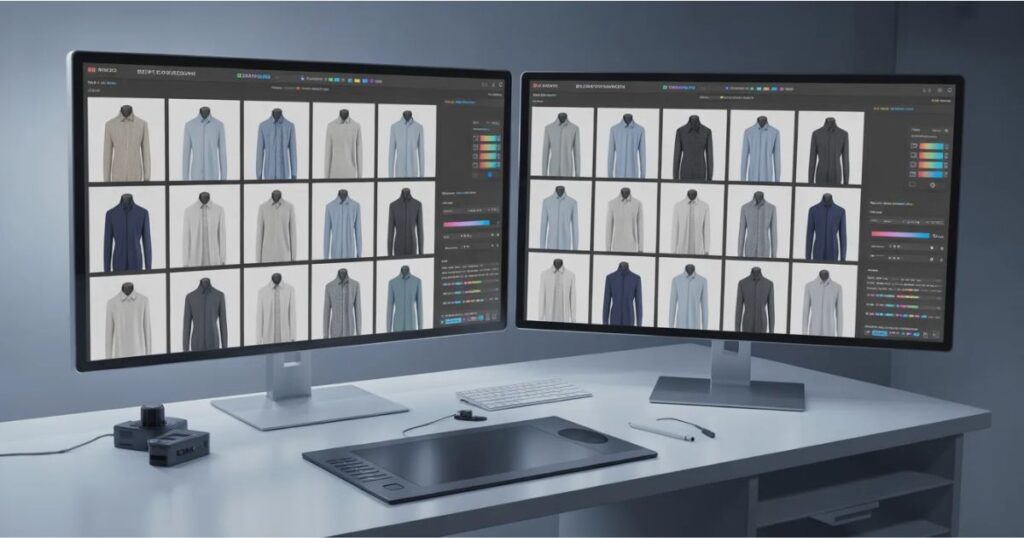
For small catalogs, handling editing internally might work. But once product volume increases, ghost mannequin editing becomes time-intensive.
Each image requires:
- Layer merging
- Inner neck reconstruction
- Shadow balancing
- Shape refinement
- Color correction
To maintain consistent results across large inventories, many D2C brands rely on professional services through the Fix Any Photo homepage.
This allows teams to:
- Process large batches quickly
- Maintain uniform presentation
- Reduce internal workload
- Focus on marketing and growth
At scale, outsourcing isn’t just about convenience. It’s about consistency.
A Simple Decision Framework for Creative Managers
If you’re deciding between formats, a practical approach is to ask three questions.
1. Is the image meant to tell a story or sell a product?
If it’s storytelling → model or flat lay
If it’s product clarity → ghost mannequin
2. Will this format scale across hundreds of SKUs?
If consistency is required → ghost mannequin
3. Does the customer need to understand the structure or fit quickly?
If yes → ghost mannequin vs flat lay comparison usually favors the ghost mannequin
This framework helps teams move away from purely aesthetic decisions and focus on performance.
The Real Difference Between Creative and Commercial Visuals
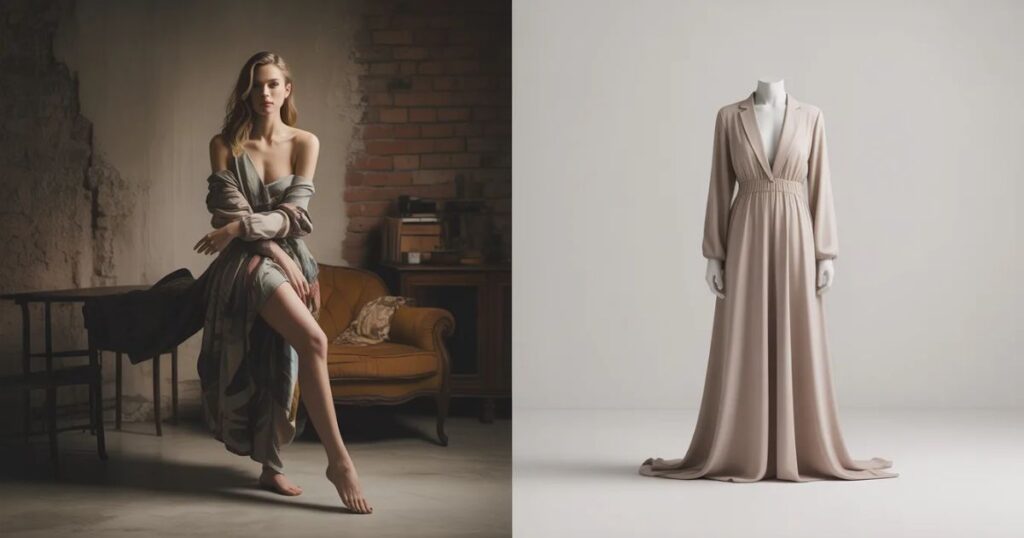
One of the biggest shifts happening in e-commerce is the separation between creative content and commercial content. Creative content builds brand identity.
Commercial content removes friction from the buying process. Flat lay and lifestyle photography often fall into the creative category. Ghost mannequin sits firmly in the commercial category. And for product pages — where the goal is conversion — commercial clarity usually matters more than visual creativity.
The Role of Consistency in Brand Perception
Customers rarely analyze product images consciously. But they notice patterns.
When every product:
- Has the same alignment
- Uses the same lighting
- Follows the same structure
The store feels organized and reliable. When formats are mixed or inconsistent, the experience feels less controlled. Over time, that perception affects trust. This is another reason the ghost mannequin vs flat lay discussion becomes more important as brands scale. Consistency isn’t just a design preference. It’s a trust signal.
Final Thoughts
The debate around ghost mannequin vs flat lay often starts as a creative discussion.
Which looks better?
Which fits the brand?
Which feels more modern?
But in 2026, the more important question is different. Which format helps customers understand the product faster? Flat lay is simple and flexible. On-model photography builds emotion and lifestyle.
But ghost mannequin offers something that e-commerce stores rely on most:
Clarity.
Consistency.
Scalability.
For D2C brands managing growing catalogs, those three factors often matter more than creative flexibility. Because at the end of the day, product images aren’t just visual assets. They’re decision tools. And when customers don’t have to guess what they’re looking at, the path from browsing to buying becomes much shorter.