

There’s a bit of confusion around this topic. Actually… more than a bit. If you’ve been using Adobe Photoshop recently, you’ve probably noticed two different ways to “enhance” images:
- Generative AI tools (often called generative upscale)
- Super Resolution
At first glance, they seem similar. Both promise better quality, sharper results, higher resolution. But they don’t behave the same way. Not even close. And that’s where this whole discussion around adobe generative upscale vs super resolution starts to matter.
Why This Comparison Matters (More Than You Think)
Let’s say you’re working on:
- Ecommerce product images
- Client work
- Social media visuals
- Or even something like apparel photography
You can’t just “enhance” images randomly.
Because the method you choose directly affects:
- Detail accuracy
- Texture realism
- Final output quality
So understanding adobe generative upscale vs super resolution isn’t optional — it’s part of doing professional work.
What Is Adobe Generative Upscale? (And Why It Feels Different)

Here’s where things get interesting. Adobe doesn’t officially call it “generative upscale” in a strict sense. Instead, it comes from their generative AI features — powered by Adobe Firefly. And what it does… is slightly different from traditional upscaling.
How Generative Upscale Works
Instead of just increasing pixels, it:
- Rebuilds missing areas
- Generates new textures
- Predicts what should exist
So in adobe generative upscale vs super resolution:
👉 Generative upscale = AI reconstruction + imagination
What It’s Actually Good At
This approach works best when:
- Image is incomplete
- Parts need expansion
- Detail is missing entirely
For example:
- Expanding backgrounds
- Filling missing edges
- Enhancing complex textures
The Trade-Off (Important)
Here’s the part people don’t always mention:
Generative upscale doesn’t guarantee accuracy.
It can:
- Add details that weren’t originally there
- Slightly alter textures
- Create “visually good” but not always “true” results
And that becomes a key point in adobe generative upscale vs super resolution.
What Is Super Resolution in Photoshop?
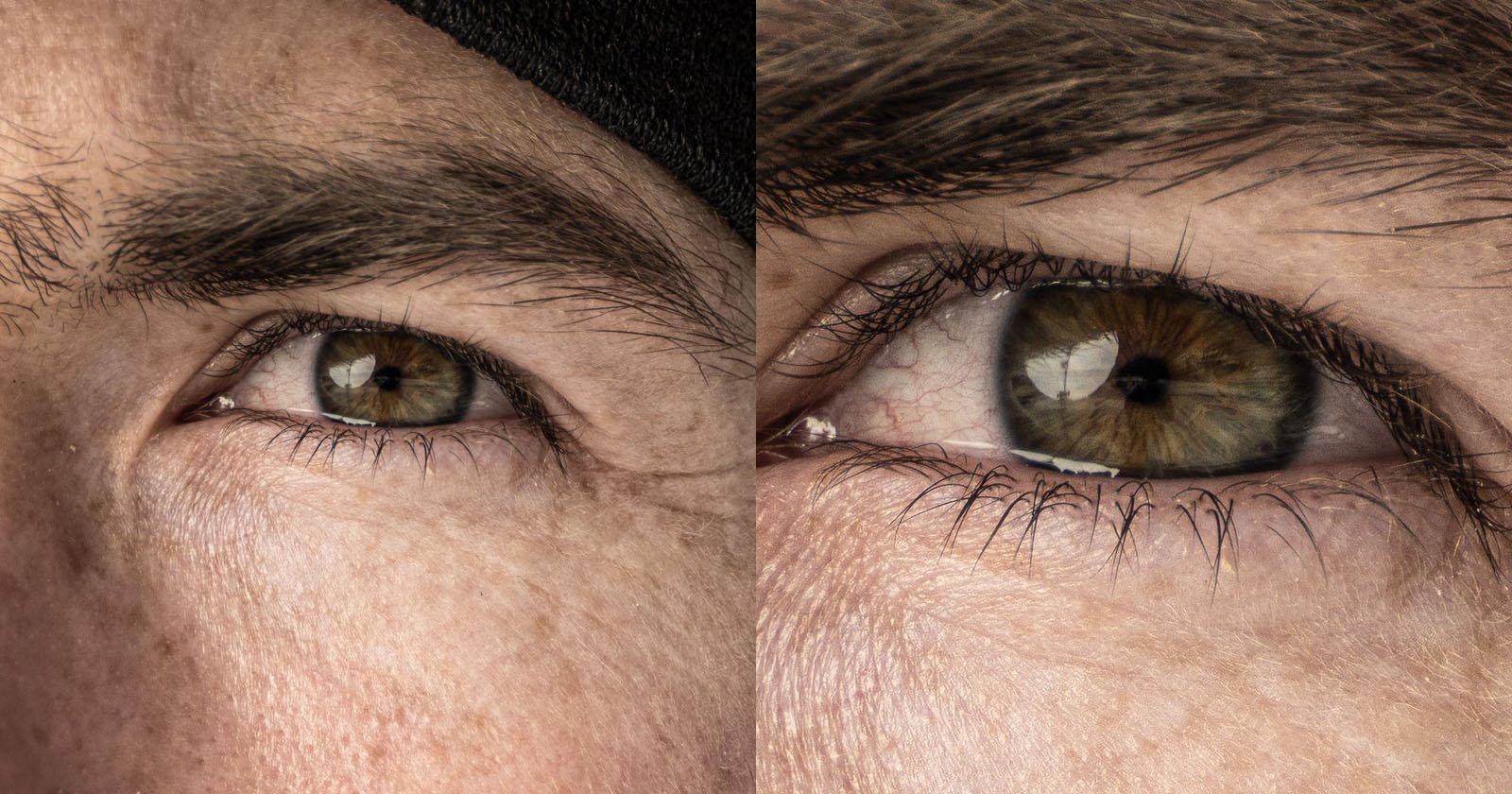
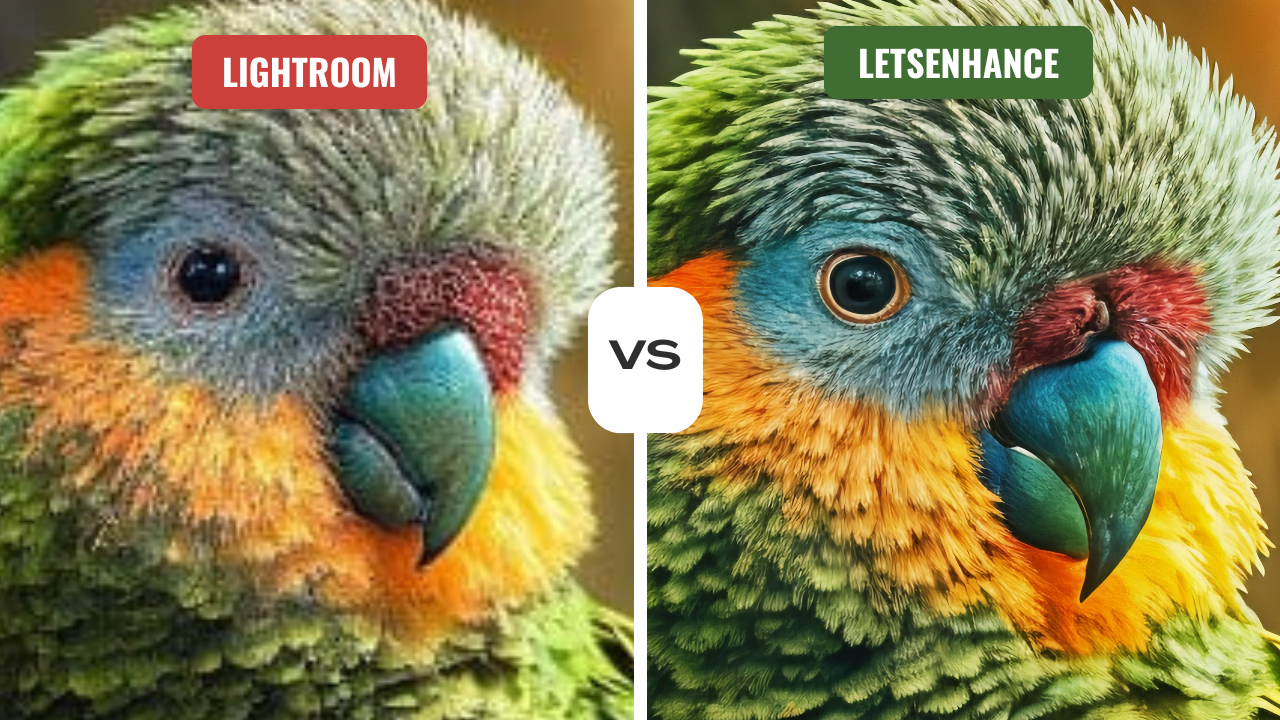

Now let’s talk about Super Resolution. This is more straightforward. And honestly… more predictable.
How Super Resolution Works
Super Resolution uses machine learning too — but in a controlled way.
It:
- Doubles image resolution
- Enhances existing detail
- Keeps structure intact
So in adobe generative upscale vs super resolution:
👉 Super Resolution = controlled enhancement
What It’s Best For
Super Resolution works best when:
- You already have a decent image
- You need higher resolution
- You want to preserve original detail
For example:
- Product images
- Portraits
- Ecommerce visuals
Why Professionals Trust It More (Sometimes)
Because it’s predictable.
It doesn’t:
- Invent new elements
- Change structure
- Distort original textures
Which makes it very reliable in workflows involving adobe generative upscale vs super resolution.
Core Difference (Simple Explanation)
Let’s simplify everything so far.
Generative Upscale
- Creates new detail
- Can change the image
- More creative, less controlled
Super Resolution
- Enhances existing detail
- Keeps image accurate
- More technical, less creative
And that’s really the foundation of adobe generative upscale vs super resolution.
Where Most People Get Confused
Here’s the issue.
Both tools:
- Use AI
- Improve images
- Increase quality
So people assume they’re interchangeable. But they’re not.
The Real Confusion
People ask:
👉 “Which one is better?”
But the better question is:
👉 “What does this image need?”
And that shift in thinking changes everything about how you approach adobe generative upscale vs super resolution.
A Small Real-World Insight
I’ve seen this happen a lot… Someone uses generative upscale on a product image — and suddenly:
- Texture looks slightly different
- Edges feel unnatural
- Product doesn’t match reality
That’s where Super Resolution would’ve been the better choice. This is exactly why understanding adobe generative upscale vs super resolution matters in real projects.
Quick Preview of What’s Next
In the next parts, we’ll go deeper into:
- Real use cases
- Workflow comparison
- Quality vs realism
- Which one to use for ecommerce
And honestly… that’s where things become clearer.
When Should You Use Generative Upscale?
Let’s start with the more “creative” side of this comparison. Because generative upscale isn’t really about fixing images — it’s about rebuilding them. And that’s an important distinction in adobe generative upscale vs super resolution.
Use Generative Upscale When Detail Is Missing
If your image has:
- Missing areas
- Cropped edges
- Incomplete backgrounds
Then generative upscale makes sense. Because it doesn’t just enhance — it creates.
Example: Expanding a Background
Let’s say you have:
- A product photo
- Tight framing
- Not enough space for design
Instead of stretching the image…
👉 You use generative AI to expand the background naturally
This is where adobe generative upscale vs super resolution becomes very clear:
- Super Resolution → improves what exists
- Generative Upscale → builds what doesn’t exist
Example: Creative Edits & Compositions
Generative upscale works well for:
- Social media visuals
- Creative compositions
- Concept designs
Where accuracy is less important than visual appeal.
When You Should NOT Use It
This is important.
Avoid generative upscale when:
- Accuracy matters (ecommerce)
- Product texture must remain exact
- Brand consistency is critical
Because AI can slightly alter details.
And in adobe generative upscale vs super resolution, that’s the biggest limitation of generative tools.
When Should You Use Super Resolution?
Now let’s talk about the more “safe” option.
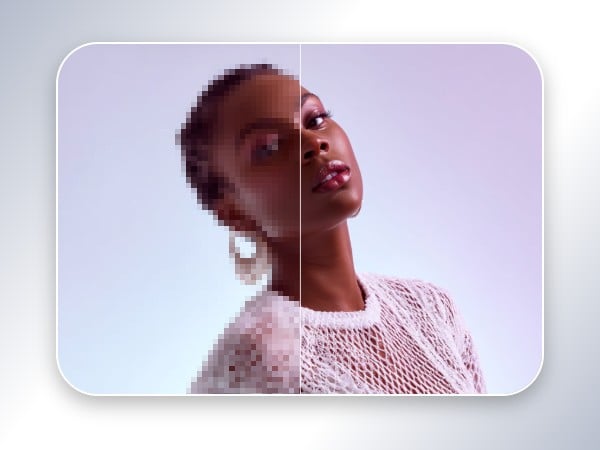
Use Super Resolution When Quality Needs Boosting
If your image is:
- Slightly low resolution
- Soft but usable
- Needs scaling for web or print
Then Super Resolution is the better choice.
Example: Ecommerce Product Image
Let’s say you’re working on:
- Shopify product images
- Amazon listings
- Catalog visuals
You need:
- Accurate textures
- Clean edges
- Realistic details
👉 This is where Super Resolution wins in adobe generative upscale vs super resolution.
Example: Fabric & Clothing Detail
In apparel photography:
- Fabric texture matters
- Stitching detail matters
- Color accuracy matters
Generative tools can distort these. Super Resolution preserves them.
Why It’s Preferred in Professional Workflows
Because it’s predictable.
And predictability is everything in client work.
Using Both Together (Advanced Workflow)
Here’s something most beginners miss… This isn’t always a “vs” situation.
Sometimes it’s:
👉 Generative + Super Resolution
Correct Workflow Order
- Generative upscale (if needed)
- Super Resolution
- Final sharpening
Why This Order Matters
- Generative tools build structure
- Super Resolution refines it
- Sharpening finalizes it
This layered approach is key in adobe generative upscale vs super resolution workflows.
Real Workflow Example (Step-by-Step)
Let’s walk through a realistic scenario.
Step 1: Start With Imperfect Image
- Low resolution
- Cropped composition
- Slight softness
Step 2: Apply Generative Upscale
- Expand background
- Fill missing areas
Step 3: Apply Super Resolution
- Increase resolution
- Enhance real details
Step 4: Final Adjustments
- Sharpening
- Color correction
- Export optimization
This is how professionals actually approach adobe generative upscale vs super resolution.
Common Mistakes (That Ruin Results)
Even experienced editors mess this up sometimes.
Using Generative Upscale for Product Images
This leads to:
- Fake textures
- Inconsistent details
- Loss of accuracy
Relying Only on Super Resolution
Super Resolution can’t:
- Expand images
- Create missing areas
So using it alone isn’t always enough.
Ignoring Workflow Order
Wrong order = poor results.
This is one of the most overlooked issues in adobe generative upscale vs super resolution.
Over-processing Images
Too much AI:
- Reduces realism
- Creates unnatural look
- Hurts brand trust
How This Applies to Ecommerce Editing
This is where things get serious.
Because in ecommerce:
👉 Image quality = conversion rate
Why Accuracy Matters More Than Creativity
For product images:
- Texture must be real
- Colors must match
- Details must be consistent
That’s why most professional workflows lean toward:
👉 Super Resolution over generative tools
Where Generative Tools Still Help
They’re useful for:
- Background extension
- Composition fixes
- Creative marketing visuals
Real Example (Apparel Editing)
In workflows like:
👉 https://fixanyphoto.com/services/ghost-mannequin-effects
Both techniques can be used — but carefully.
- Generative → for background
- Super Resolution → for product detail
This balance is what defines effective use of adobe generative upscale vs super resolution.
A Slightly Different Perspective
Here’s something worth thinking about… Generative AI is powerful. Maybe too powerful sometimes. It makes images look better — but not always more truthful. And that’s where Super Resolution quietly becomes more reliable. This subtle difference is at the heart of adobe generative upscale vs super resolution.
Quick Decision Guide
If you’re unsure, use this:
Image missing content?
👉 Generative Upscale
Image low resolution but complete?
👉 Super Resolution
Image needs both fixes?
👉 Use both (correct order)
This simplifies adobe generative upscale vs super resolution decisions instantly.
What’s Happening Behind the Scenes? (Not Exactly Obvious)
At a glance, both tools look like they’re doing the same thing:
👉 improving image quality
But under the hood… they’re doing very different things. And that difference explains almost everything about adobe generative upscale vs super resolution.
Generative Upscale = Prediction + Reconstruction
Generative tools (powered by Adobe Firefly) work like this:
- They analyze the image
- Identify patterns
- Predict what should be there
- Generate new pixels accordingly
So technically, the image is being partially recreated, not just enhanced.
Which means:
👉 You’re not always looking at the original data anymore
That’s a key point in adobe generative upscale vs super resolution.
Super Resolution = Enhancement + Preservation
Super Resolution, inside Adobe Photoshop / Lightroom, works differently:
- It analyzes existing pixels
- Upscales them intelligently
- Preserves original structure
So instead of “guessing,” it’s more like:
👉 refining what already exists
And that makes it far more controlled in adobe generative upscale vs super resolution workflows.
Detail Quality — Which One Actually Looks Better?
This is where things get… a little subjective. Because “better” depends on what you’re looking for.
Generative Upscale Can Look More Impressive (At First)
Sometimes generative results look:
- Sharper
- Richer
- More detailed
But if you look closely…
- Some textures feel artificial
- Edges may not match reality
- Details can be slightly inconsistent
So yes — visually impressive, but not always accurate.
Super Resolution Looks More Natural
Super Resolution results are usually:
- More realistic
- Consistent with original image
- Less “over-processed”
But they may not look as dramatic.
And that’s the trade-off in adobe generative upscale vs super resolution:
👉 Generative = visually enhanced
👉 Super Resolution = realistically enhanced
Texture Handling (Very Important for Designers)
This is something a lot of people overlook.
But if you’re working with:
- Clothing
- Fabric
- Skin
- Product surfaces
Then texture accuracy matters a lot.
Generative Upscale & Texture Risk
Generative AI can:
- Smooth out textures
- Replace fine detail
- Introduce artificial patterns
Which can be problematic in commercial work.
Super Resolution & Texture Accuracy
Super Resolution:
- Preserves original texture
- Enhances without distortion
- Keeps details consistent
That’s why in adobe generative upscale vs super resolution, professionals often prefer Super Resolution for product work.
Consistency Across Multiple Images
Now this is a subtle issue… but a big one.
Generative Tools Can Be Inconsistent
If you process multiple images:
- Each result may vary slightly
- Textures may differ
- Lighting may shift
This inconsistency can hurt brand presentation.
Super Resolution Is More Stable
Super Resolution produces:
- Consistent outputs
- Predictable results
- Uniform quality
Which is critical in workflows involving adobe generative upscale vs super resolution, especially for ecommerce.
Realism vs Enhancement (The Hidden Trade-Off)
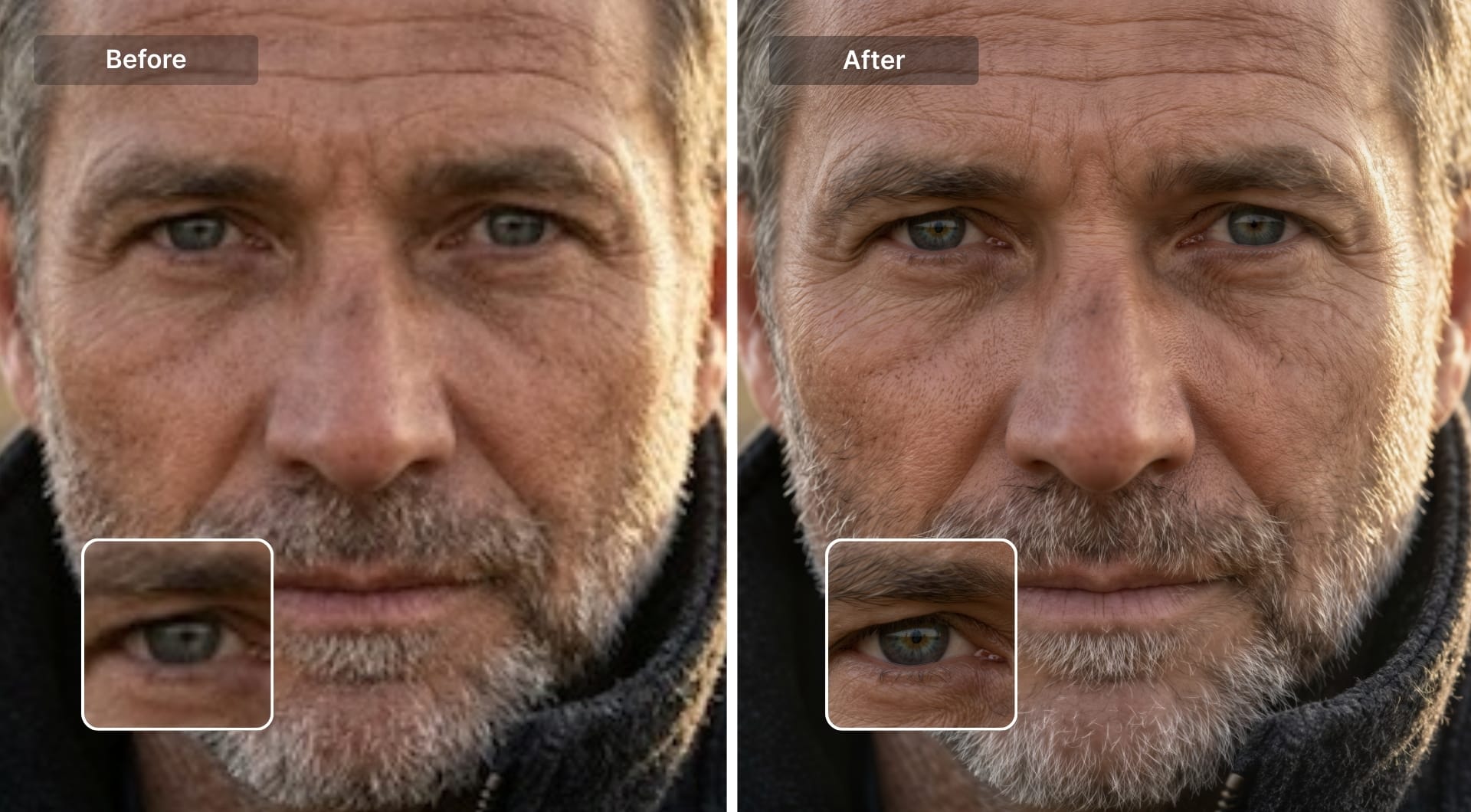
This is probably the most important insight.
Generative Upscale Improves Perception
It makes images look:
- More detailed
- More polished
- More visually appealing
But not always more true.
Super Resolution Maintains Reality
It keeps:
- Real textures
- Real structure
- Real details
Even if the result looks slightly less dramatic.
So Which One Is “Better”?
It depends.
- For creative visuals → Generative
- For accurate visuals → Super Resolution
This balance defines adobe generative upscale vs super resolution.
Advanced Workflow Insight (What Professionals Actually Do)
Here’s something interesting…
Most professionals don’t rely on just one method.
They combine them — carefully.
Hybrid Workflow Example
- Use generative tools (if needed)
- Apply Super Resolution
- Refine with sharpening
- Adjust color + contrast
Why This Works
Because:
- Generative tools handle structure
- Super Resolution handles detail
- Sharpening handles clarity
This layered workflow is central to adobe generative upscale vs super resolution.
Where This Matters Most (Ecommerce & Editing Services)
Let’s connect this to real business use.
Because this isn’t just theory.
Product Photography Requires Accuracy
In ecommerce:
- Customers expect real textures
- Colors must match
- Details must be reliable
That’s why workflows like:
👉 https://fixanyphoto.com/services/ghost-mannequin-effects
prioritize accuracy over creativity.
Where Generative Tools Still Help
They’re useful for:
- Background extension
- Composition fixes
- Creative campaigns
But not for core product detail.
A Slight Observation (From Real Use)
Sometimes…Generative results look amazing at first glance. But after a while, something feels slightly off. It’s subtle. Hard to explain.
That’s usually the difference between:
👉 Artificial enhancement
👉 Natural enhancement
And that’s really what adobe generative upscale vs super resolution comes down to.
Quick Technical Summary
- Generative upscale = AI prediction + creation
- Super Resolution = AI enhancement + preservation
- Generative = flexible but less accurate
- Super Resolution = controlled and reliable
Final Comparison — Adobe Generative Upscale vs Super Resolution
At this point, everything should feel clearer… at least a bit. Still, it helps to see things side-by-side.
Direct Comparison Table
| Aspect | Generative Upscale | Super Resolution |
|---|---|---|
| Core Function | Rebuilds / generates detail | Enhances existing detail |
| Accuracy | Medium (can vary) | High (preserves original) |
| Texture Handling | Can alter textures | Maintains real textures |
| Consistency | Variable | Stable |
| Best For | Creative edits, expansion | Product images, scaling |
| Risk Level | Higher (AI variation) | Lower (predictable output) |
| Control | Less predictable | More controlled |
Simplest Explanation (If You Forget Everything Else)
👉 Generative upscale = AI imagination
👉 Super Resolution = AI refinement
That’s the essence of adobe generative upscale vs super resolution.
Decision Framework (What Should You Use?)
Now let’s make this practical. Because in real work, you don’t analyze — you decide.
Scenario-Based Guide
If your image is incomplete or needs expansion:
👉 Use Generative Upscale
If your image is complete but low resolution:
👉 Use Super Resolution
If your image needs both improvement and extension:
👉 Use both (correct order)
If accuracy is critical (ecommerce/products):
👉 Prefer Super Resolution
This simple framework solves most confusion around adobe generative upscale vs super resolution.
The Ideal Workflow (Professional Use)
Let’s combine everything into one clean workflow.
Step-by-Step Workflow
- Analyze the image
- Apply generative tools (if needed)
- Apply Super Resolution
- Apply sharpening
- Final adjustments
Why This Works
Because:
- Generative builds structure
- Super Resolution enhances detail
- Sharpening refines clarity
This is the correct sequence in adobe generative upscale vs super resolution workflows.
Where Most People Still Make Mistakes
Even after understanding the basics, issues still happen.
Overusing Generative Tools
Results in:
- Artificial textures
- Inconsistent details
- Unrealistic images
Ignoring Super Resolution
Some users skip it entirely — which leads to:
- Weak detail
- Poor scaling
- Lower quality output
Using Wrong Tool for Product Images
This is critical.
For ecommerce:
👉 Accuracy > creativity
And that shifts the balance in adobe generative upscale vs super resolution.
Why This Matters for Real Projects

This isn’t just about editing techniques.
It affects:
- Brand perception
- Product trust
- Conversion rates
Especially in ecommerce workflows like:
👉 https://fixanyphoto.com/services/ghost-mannequin-effects
Where consistency and realism matter more than anything else.
Key Takeaways
- adobe generative upscale vs super resolution solves two different problems
- Generative upscale creates new details using AI
- Super Resolution enhances existing details
- Generative tools are flexible but less predictable
- Super Resolution is stable and more accurate
- Best results often come from combining both
- Workflow order matters (generative → super resolution → sharpening)
- For ecommerce, accuracy should always be the priority
FAQs
What is the main difference between adobe generative upscale vs super resolution?
Generative upscale creates new details using AI, while Super Resolution enhances existing details without altering the original structure.
Which is better: generative upscale or super resolution?
Neither is universally better. Generative upscale is better for creative edits, while Super Resolution is better for accurate image enhancement.
Can I use generative upscale and super resolution together?
Yes, many professional workflows combine both for better results.
Is generative upscale safe for product images?
It can be used carefully, but it may alter textures. For product accuracy, Super Resolution is usually preferred.
Does Super Resolution improve image quality without changing details?
Yes, it enhances resolution while preserving original textures and structure.
Which method is better for ecommerce photography?
Super Resolution is generally better because it maintains accuracy and consistency.
Final Thoughts
If you look at it closely… The debate around adobe generative upscale vs super resolution isn’t really about choosing one over the other. It’s about understanding intent.
Sometimes you need creativity. Sometimes you need accuracy. And sometimes… you need a bit of both. The difference is subtle, but once you notice it — you start making better decisions. And better decisions usually lead to better results.
{
“@context”: “https://schema.org”,
“@type”: “Article”,
“headline”: “Adobe Generative Upscale vs Super Resolution Guide”,
“description”: “Learn the difference between Adobe Generative Upscale and Super Resolution, including quality, accuracy, AI behavior, and best use cases.”,
“author”: {
“@type”: “Person”,
“name”: “Editorial Team”
},
“publisher”: {
“@type”: “Organization”,
“name”: “FixAnyPhoto”,
“logo”: {
“@type”: “ImageObject”,
“url”: “https://fixanyphoto.com/logo.png”
}
},
“mainEntityOfPage”: {
“@type”: “WebPage”,
“@id”: “https://fixanyphoto.com/adobe-generative-upscale-vs-super-resolution”
},
“image”: “https://fixanyphoto.com/images/adobe-upscale-vs-super-resolution.jpg”,
“datePublished”: “2026-04-08”,
“dateModified”: “2026-04-08”,
“articleSection”: “Photo Editing”,
“keywords”: [
“adobe generative upscale vs super resolution”,
“photoshop super resolution”,
“adobe firefly upscale”,
“ai image upscaling”,
“image enhancement comparison”
],
“wordCount”: “3500”,
“articleBody”: “This article explains the difference between Adobe Generative Upscale and Super Resolution, their workflows, use cases, and which one to use for ecommerce, product photography, and creative editing.”
}